Pool Tour - Pocket Billiards
- 4.6
- Rating
- 5.00M
- Installs
- Free
- Price
 Analysis by App-foxy
Pool Tour - Pocket Billiards is the kind of sports game I can understand immediately: pick up the phone, line up a shot, and try to clear the table without dealing with a complicated tutorial. I spent time with it as a quick, arcade-style pool game, and its biggest strength is how quickly it turns a spare minute into a playable session. It is free, aimed at Everyone, and comes from Candy Mobile, so the presentation is clearly built for broad accessibility rather than serious billiards simulation.
That accessibility matters. I do not need to know formal pool rules to enjoy the opening sessions, and I can make progress through simple practice rather than studying a control scheme. At the same time, the game is not automatically a permanent fixture on every phone. Its lasting value depends on whether you enjoy repeating short table challenges and gradually improving your aim. My overall impression is positive, but it is strongest as a lightweight arcade diversion rather than a complete replacement for a dedicated online pool community or a highly realistic simulator.
Why the first sessions work so well
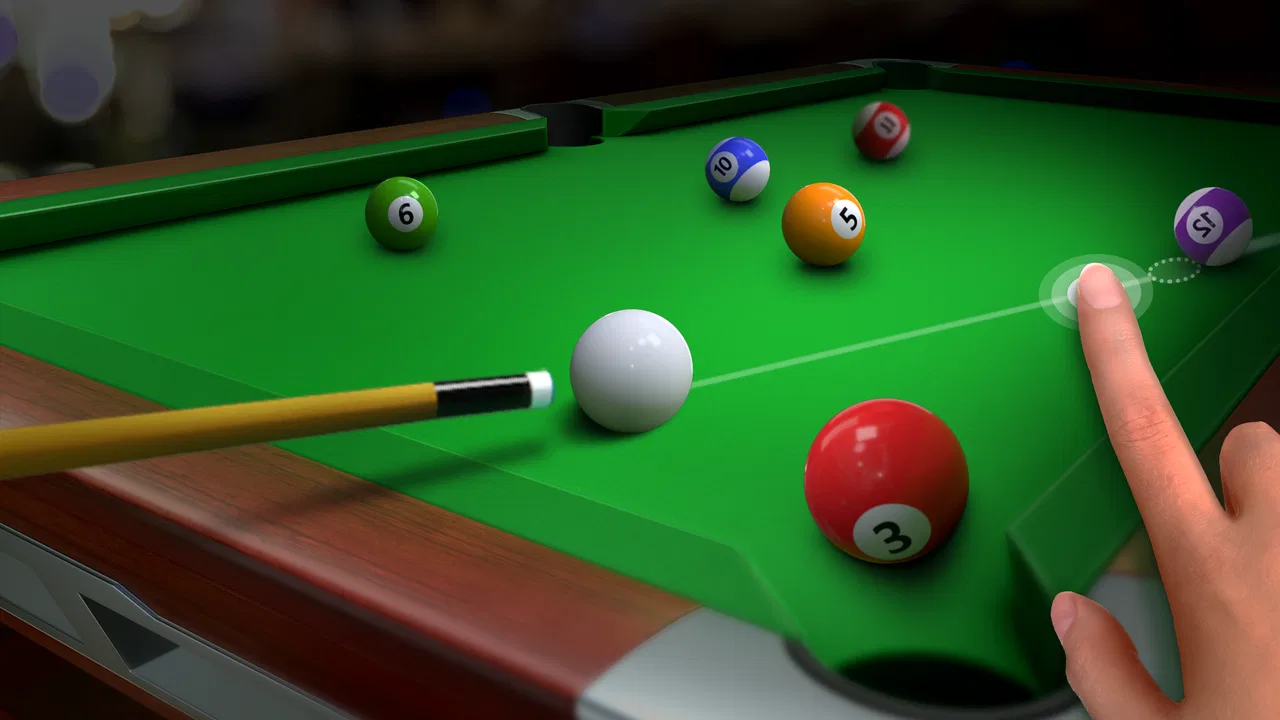
The first-week appeal comes from the physical clarity of the game. A pool table gives every action an obvious purpose: choose the direction, judge the strength, and watch the cue ball react. That makes each turn feel more meaningful than a simple tap-based sports game. Even when I miss, I usually understand why the shot failed, which encourages another attempt instead of making the result feel random.
You May Also Like

 Google Keep - Notes and lists
Google Keep’s Quiet Growth Shows the Appeal of Simpler Notes
As mobile work gets busier, Google Keep keeps winning a simple contest: capture a thought quickly, find it later, and get on with the day.

 Blood Strike: 2.5 Anniversary
Blood Strike’s Loadouts Turn Every Drop Into a Tactical Gamble
A close look at Blood Strike’s custom loadouts: how fast access to signature weapons reshapes its battle royale rhythm, rewards preparation, and narrows the gap between fights.

 Pandora - Music & Podcasts
Pandora’s Music Is Easy to Start, but Harder to Recover
Pandora’s strength is its low-effort path from a seed to a station. Its weak spot is how much confidence it asks you to place in connection, setup, and quiet recovery.

 8 Ball Pool
 Is Built on Rivalries, Rematches, and Routine
A close look at the rivalries, rematches, shared routines, and unanswered safety questions that turn a quick pool match into a persistent mobile community.

 Samsung Music
’s Quiet Strength Is Playing What You Already Own
Its reach comes less from spectacle than from dependable access to a personal library. That simplicity is both the app’s strongest retention engine and its ceiling.

 AccuWeather: Weather Radar
AccuWeather Review: A Quick, Clear Forecast for Everyday Decisions
For everyday plans, the best forecast is the one you can understand quickly. AccuWeather makes rain timing, radar, and local conditions easy to act on, with a few trade-offs.
More From Our News Desk



The arcade approach also keeps the pace friendly. A realistic billiards title can ask me to think about spin, angles, positioning, and strict foul rules before I have even taken a comfortable shot. Here, the emphasis is more immediate. I can focus on the next ball, learn how much force feels appropriate, and build confidence through repetition. For someone who wants a casual pool game on Android rather than a detailed simulation, that is a sensible design choice.
I found the game particularly suitable for short breaks. A typical scenario is waiting for transport or taking a few minutes away from work: I can play a small number of turns, stop without losing an hour, and return later when I feel like practicing again. That compact rhythm is more useful than it sounds. Many mobile sports games demand a long match or a full campaign session, while this one fits naturally around everyday interruptions.
The controls are also approachable for players who are not regular mobile gamers. Pool already provides a familiar visual language, so the table itself teaches much of the interaction. I recommend beginning with gentle shots instead of immediately trying to clear several balls in a row. Early restraint helps reveal how the cue ball travels and prevents the common mistake of using too much power simply because a stronger shot looks more dramatic.
One of my favorite practical habits is to treat the cue ball as the real target. New players often stare only at the ball they want to pocket, but the position left afterward determines whether the next shot will be comfortable. Even in an arcade-focused game, thinking one turn ahead makes the experience more satisfying. It changes the session from random tapping into a small exercise in planning.
The game’s broad reach is reflected in its store presence: it has passed five million installs and holds a 4.6 average from roughly 120 thousand ratings. Those figures do not guarantee that every player will enjoy the same style, but they do suggest that the simple pool format has found a substantial audience. I can see why. The basic loop is understandable within minutes, and the low entry barrier makes it easy to recommend to a friend who wants something uncomplicated.
What to learn before the novelty fades
The first few days can make the game feel richer than it actually is because every improvement is noticeable. I begin by missing easy shots, then learn to control direction and strength, and soon start planning small combinations. That learning curve creates a pleasant sense of progress. The important question is what happens after those early gains become routine.
My advice is to use the opening period deliberately. Rather than rushing through every available challenge, I would spend time testing soft, medium, and firm shots from similar positions. This gives a better feel for the table than simply chasing successful pockets. It also exposes an important trade-off: fast progress may be exciting, but careful practice is more likely to keep the game interesting after the initial discovery phase.
Players looking for a social pool room should set expectations early. This is presented as an arcade-style mobile experience, not as a substitute for meeting opponents in a full competitive community. If your main motivation is ranking against friends, chatting between matches, or building a detailed player identity, a multiplayer-focused alternative may serve you better. If your priority is immediate solo play, the simpler structure is an advantage.
Does it have month-to-month value?
After the first month, the appeal becomes more selective. I would keep it installed if I enjoyed the small satisfaction of improving shot selection and wanted a low-pressure sports game available without preparation. The recurring value comes from replaying familiar fundamentals with better judgment, not from a dramatic change in how pool is played.
That distinction is important. Some mobile games remain fresh because they constantly add new systems, characters, or competitive layers. Pool Tour - Pocket Billiards relies more on the enduring appeal of the table itself. If lining up angles is satisfying to you, repeated sessions can remain relaxing. If you need frequent novelty, the same straightforward rhythm may start to feel predictable.
I see three useful long-term audiences. The first is a casual player who wants a quick distraction and does not want a complicated sports title. The second is a beginner who wants to become more comfortable with pool concepts through repetition. The third is someone who already likes billiards and appreciates having a simple practice-style game available when a real table is not convenient.
It is less convincing for a player who expects a deep simulation. A serious billiards enthusiast may prefer an app that models table conditions, cue behavior, advanced spin, or structured competition in greater detail. I would also hesitate to recommend it as the only game for someone who needs constant social interaction. The accessible arcade format is its identity, but that same simplicity limits the number of different reasons to return.
A useful month-to-month routine is to play with a specific goal instead of opening the game aimlessly. One session can focus on avoiding excessive power. Another can focus on leaving the cue ball in a useful position. A third can be about taking safer shots rather than attempting spectacular combinations. This turns repetition into practice and gives each short visit a purpose.
The game is free, which makes that experiment easy. I can install it, test the controls, and decide whether the core loop suits me without committing money first. Free access does not make every limitation irrelevant, though. A player should still judge whether the time spent repeating the same style of challenge feels rewarding. In my experience, the right question is not whether it offers endless variety, but whether the basic act of making a clean shot remains enjoyable.
How it compares with familiar alternatives
Compared with a physical pool table, this game wins on convenience and loses on tactile realism. There is no real cue in my hands, no changing room condition, and no need to find another player nearby. That makes it ideal for spontaneous practice or relaxation, but it cannot reproduce the social atmosphere and physical feedback of playing in person.
Compared with a highly realistic billiards simulator, its arcade character is less intimidating. I can start playing without learning every technical detail. The trade-off is that experienced players may find the system less demanding over time. I would choose this title when I want quick access and choose the simulator when I want deeper control and a stronger sense of authenticity.
Compared with a competitive online pool game, it is better suited to private, low-pressure sessions. There is less emotional cost when a shot goes wrong because I am not letting down a teammate or losing a live contest. On the other hand, players motivated by rivalry may run out of reasons to return sooner. The best choice depends on whether your reward comes from improving your own decisions or defeating another person.
Maintenance, friction, and the reasons players may tire
The maintenance burden is relatively light from a player’s point of view. The game is compatible with older Android devices starting from Android 4.0, and its current version is 1.9.9. That broad technical reach is helpful if you have an older phone or want a game that does not feel designed only for recent hardware. I would still keep enough free storage and close unnecessary background apps if performance becomes uneven, but the stated system requirement is notably modest.
The more significant maintenance issue is personal rather than technical: keeping the experience fresh. Because the central activity is always about taking pool shots, I need to supply some of the variety myself through different goals and playing styles. Without that effort, sessions can become automatic. I may open the game, repeat the same safe approach, and stop feeling that I am learning anything.
Another source of fatigue is the gap between a successful result and a satisfying result. Pocketing a ball feels good, but a clean sequence that leaves the cue ball well placed feels better. If the game’s available challenges do not continue to test that second skill, experienced players may feel that their improvement has nowhere meaningful to go. This is not a flaw for a casual arcade title, but it is a real limitation for long-term specialists.
I also noticed how easy it is to overuse power. Strong shots create immediate visual excitement, yet they often make the next position harder to predict. My practical tip is to use the minimum force that reaches the target, particularly when the next ball is nearby. This small adjustment reduces chaotic rebounds and makes the game feel more deliberate. It is one of the simplest ways to extend the learning value beyond the first week.
Players who dislike repetition should pay attention to their own reaction after several sessions. If the pleasure comes mainly from discovering new content, the game may lose its appeal once the controls become familiar. If the pleasure comes from refining judgment, it has a better chance of becoming a dependable habit. I would not install it expecting a constantly changing service; I would install it expecting a compact pool loop that may reward practice.
The age rating of Everyone makes it easy to consider for a broad household audience. That does not mean every family member will want the same thing from it. Younger or inexperienced players may enjoy the immediate feedback, while adults seeking serious competition could find the presentation and structure too light. It works best when everyone understands that this is casual sports entertainment, not a full club-style billiards platform.
My long-term verdict
After the novelty fades, Pool Tour - Pocket Billiards earns lasting space for a specific kind of player: someone who likes short, accessible pool sessions and is happy to create personal goals inside a straightforward arcade format. I appreciate that I can return to it without relearning a complex system. The table gives every session a clear focus, and small improvements in aim or strength can still feel rewarding.
I would not call it an essential installation for every sports fan. Its simplicity is both the reason it is easy to recommend and the reason some players will eventually move on. Those wanting live rivalry, a detailed simulation, or a large range of changing activities should look elsewhere. A physical table is also the better option when social contact and real-world technique matter more than convenience.
For me, the strongest use case is the in-between moment: I have a few minutes, want something more involving than a passive video, and do not want to commit to a long match. The free price lowers the risk, the Everyone rating broadens its audience, and Candy Mobile has kept the concept focused rather than burying the shot-making under unnecessary complexity.
The final decision comes down to your tolerance for repetition. If you enjoy practicing angles, controlling force, and making the next shot easier, this can remain a pleasant habit well beyond the first week. If you need fresh mechanics or constant competition, the initial appeal may not survive. My recommendation is to treat it as a reliable pocket-sized pool table, not as a complete billiards universe. In that role, it does its job well enough to deserve a place on the phone of the right casual player.
FAQs for Pool Tour - Pocket Billiards
01What game modes are available in Pool Tour - Pocket Billiards?
Pool Tour - Pocket Billiards offers a variety of game modes to cater to different player preferences. You can enjoy classic 8-ball and 9-ball modes, along with unique challenges and tournaments. Whether you prefer playing solo or competing against friends, the game provides options to suit all skill levels.
02Is an internet connection required to play Pool Tour - Pocket Billiards?
While Pool Tour - Pocket Billiards offers offline play for single-player modes, an internet connection is needed for multiplayer matches and accessing leaderboards. This ensures a seamless competitive experience, allowing you to challenge friends or global players while tracking your progress and achievements.
03Are there in-app purchases in Pool Tour - Pocket Billiards?
Yes, Pool Tour - Pocket Billiards includes in-app purchases to enhance your gaming experience. Players can buy coins and exclusive items, such as custom cues and table designs. While these purchases can enhance gameplay, they are optional, and players can enjoy the game without spending money.
04How does the game ensure fair play in multiplayer matches?
Pool Tour - Pocket Billiards uses a robust matchmaking system to ensure fair play. Players are paired with opponents of similar skill levels, and the game employs anti-cheat measures to maintain integrity. This creates a balanced and competitive environment for all participants.
05Can I customize my pool table and cue in Pool Tour - Pocket Billiards?
Yes, customization is a key feature in Pool Tour - Pocket Billiards. Players can personalize their pool tables and cues with a wide range of designs and colors. This allows you to add a personal touch to your game and showcase your unique style to opponents and friends.
Pros
- Realistic physics enhance gameplay experience.
- Wide variety of cue and table designs.
- Smooth multiplayer functionality.
- Regular updates with new features.
- User-friendly interface and controls.
Cons
- Occasional in-app purchase prompts.
- Ads can interrupt gameplay.
- Requires a stable internet connection.
- Limited offline mode features.
- Some features locked behind paywall.

Pool Tour - Pocket Billiards
Gallery